
Taj Mahal in Agra, India
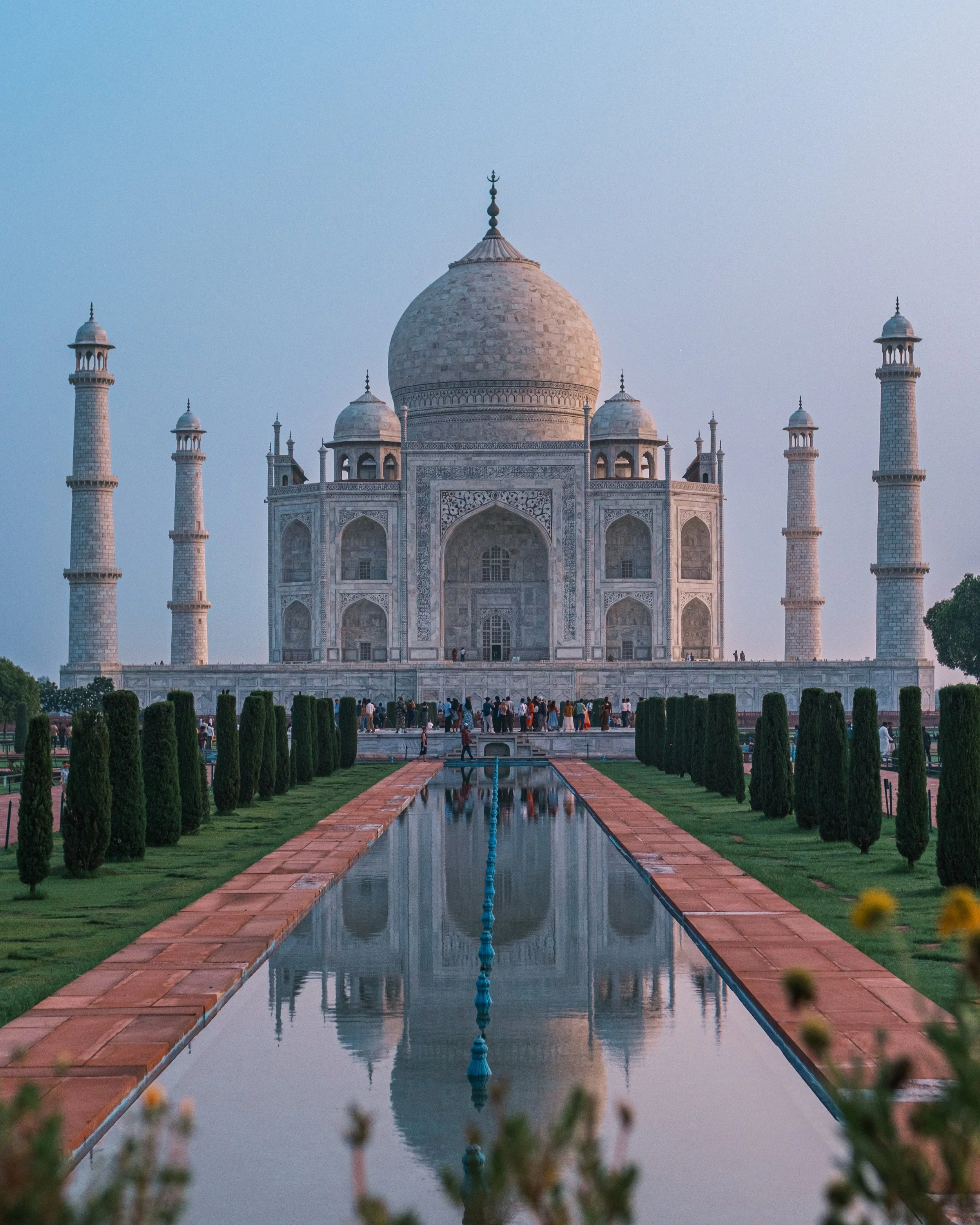
On my second trip to India in 2022, I traveled to Agra with my family to document the legendary Taj Mahal. As one of the world's most iconic examples of Mughal architecture, this white marble mausoleum offers a masterclass in Indo-Islamic design, seamlessly blending Persian, Indian, and Islamic styles.
Commissioned by Emperor Shah Jahan in 1631 to honor his wife, Mumtaz Mahal, the complex is a UNESCO World Heritage site renowned for its perfect symmetry and intricate marble inlay. Spanning two decades of construction from 1632 to 1653, the site includes the central tomb, lush gardens, and a grand red sandstone gateway. Beyond its status as a global symbol of love, the Taj Mahal remains a pinnacle of architectural achievement and a bucket-list destination for travel photography enthusiasts worldwide.
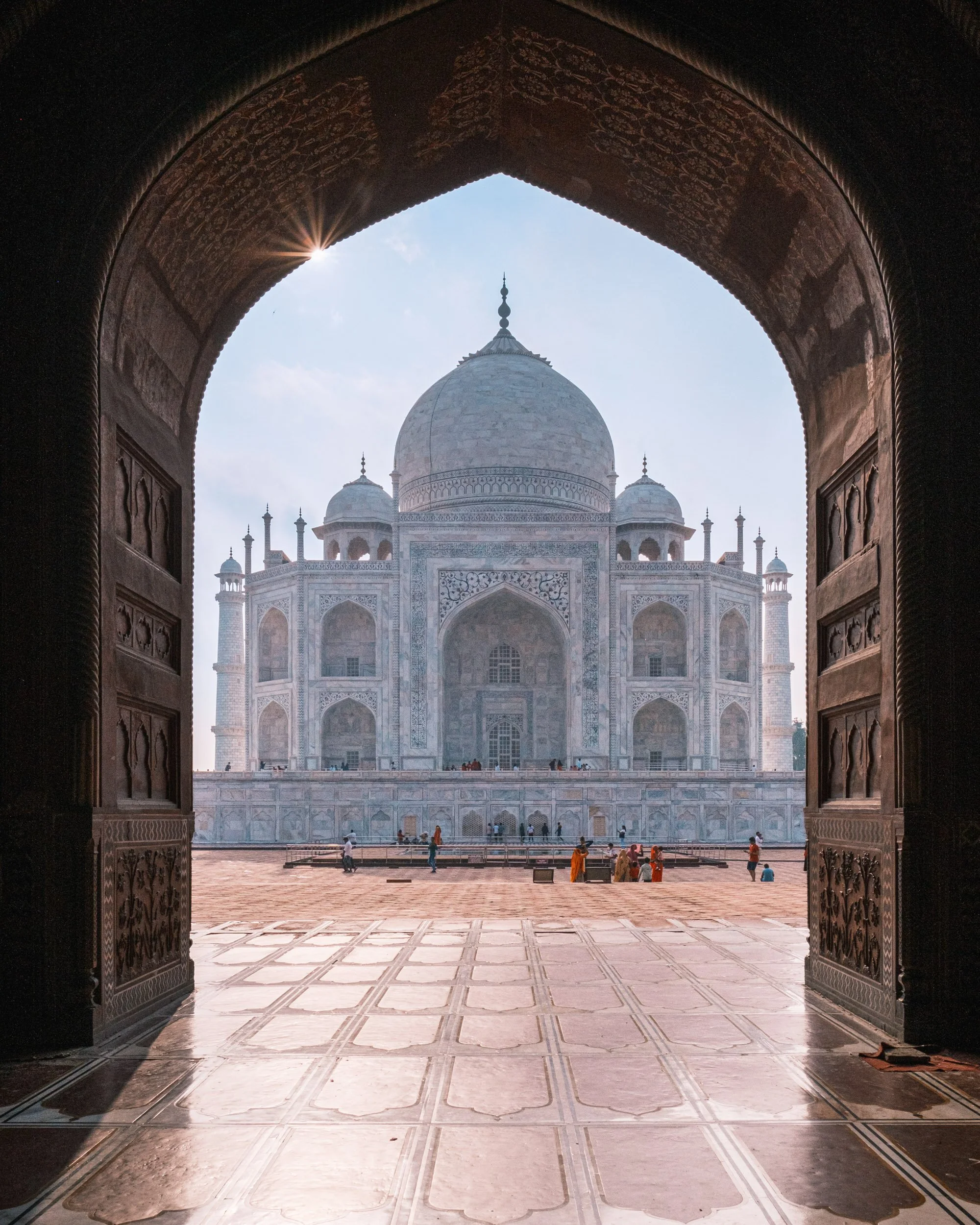
A morning visit to this historic site proved essential for managing the mid-September heat and harsh shadows. Arriving before opening allowed us to beat the crowds and utilize the soft, post-sunrise golden hour light, which is ideal for highlighting architectural textures. Due to strict security regulations regarding tripods and bags, I opted for a minimalist travel photography gear setup: a single wide-angle zoom lens paired with a shift adapter to maintain perspective control without a bulky kit.
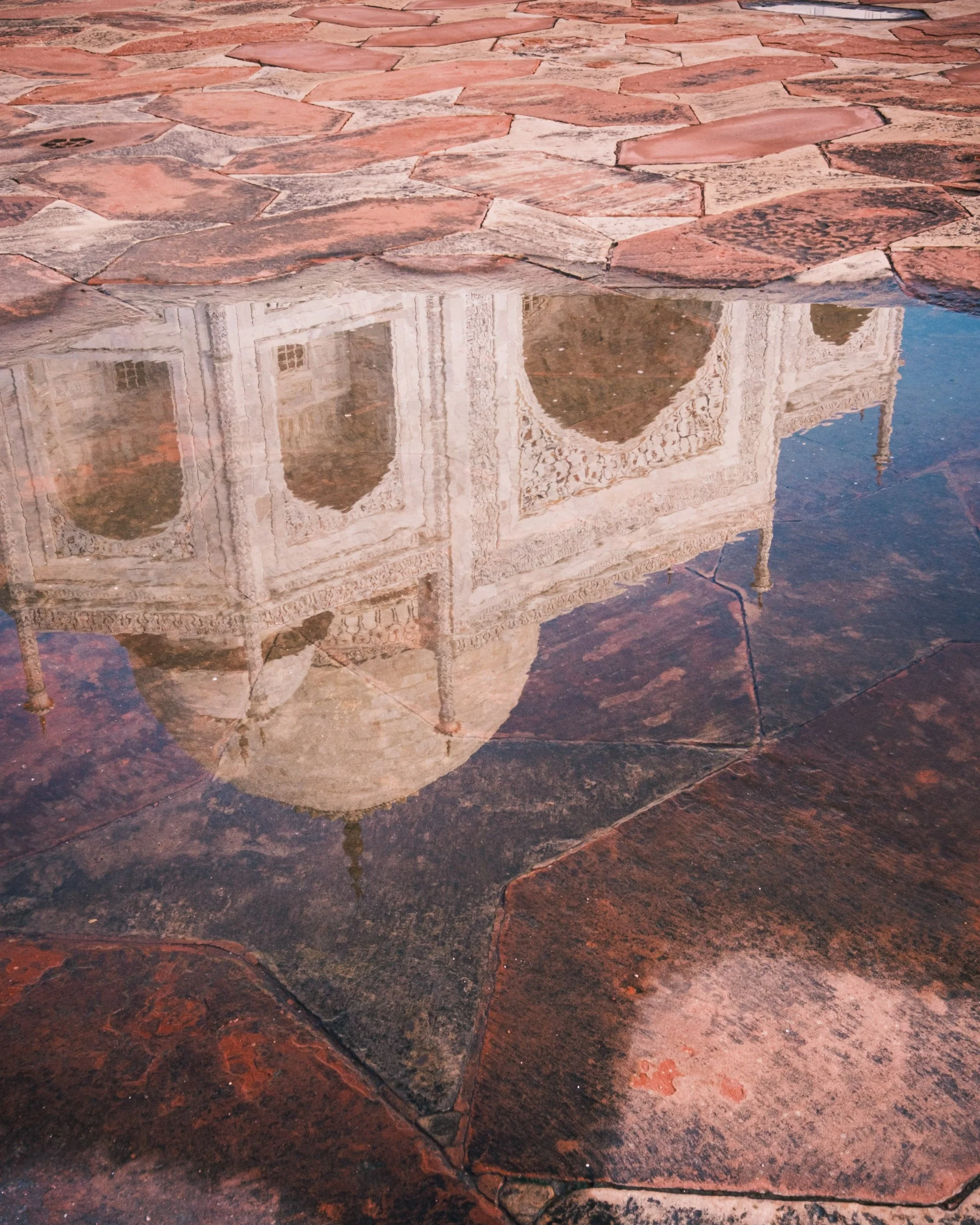
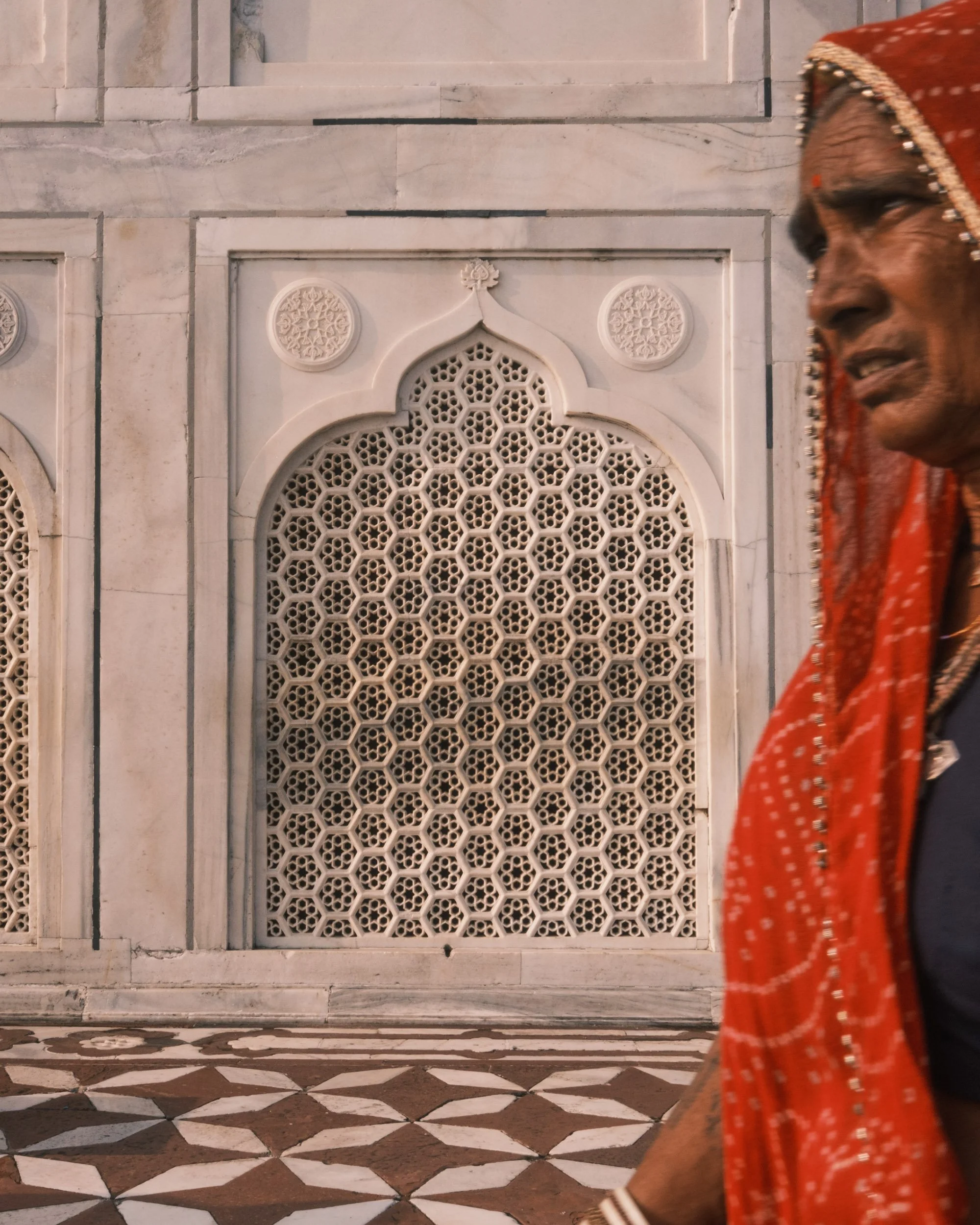
Rather than competing for the same iconic shots as every other tourist, I focused on unique compositions that incorporated the natural movement of visitors. This "go with the flow" approach to high-traffic architectural sites creates a more authentic narrative of the space in its modern context. By prioritizing handheld architectural photography and creative framing over rigid setups, I was able to capture a more personal and enjoyable visual story of this world-renowned landmark.
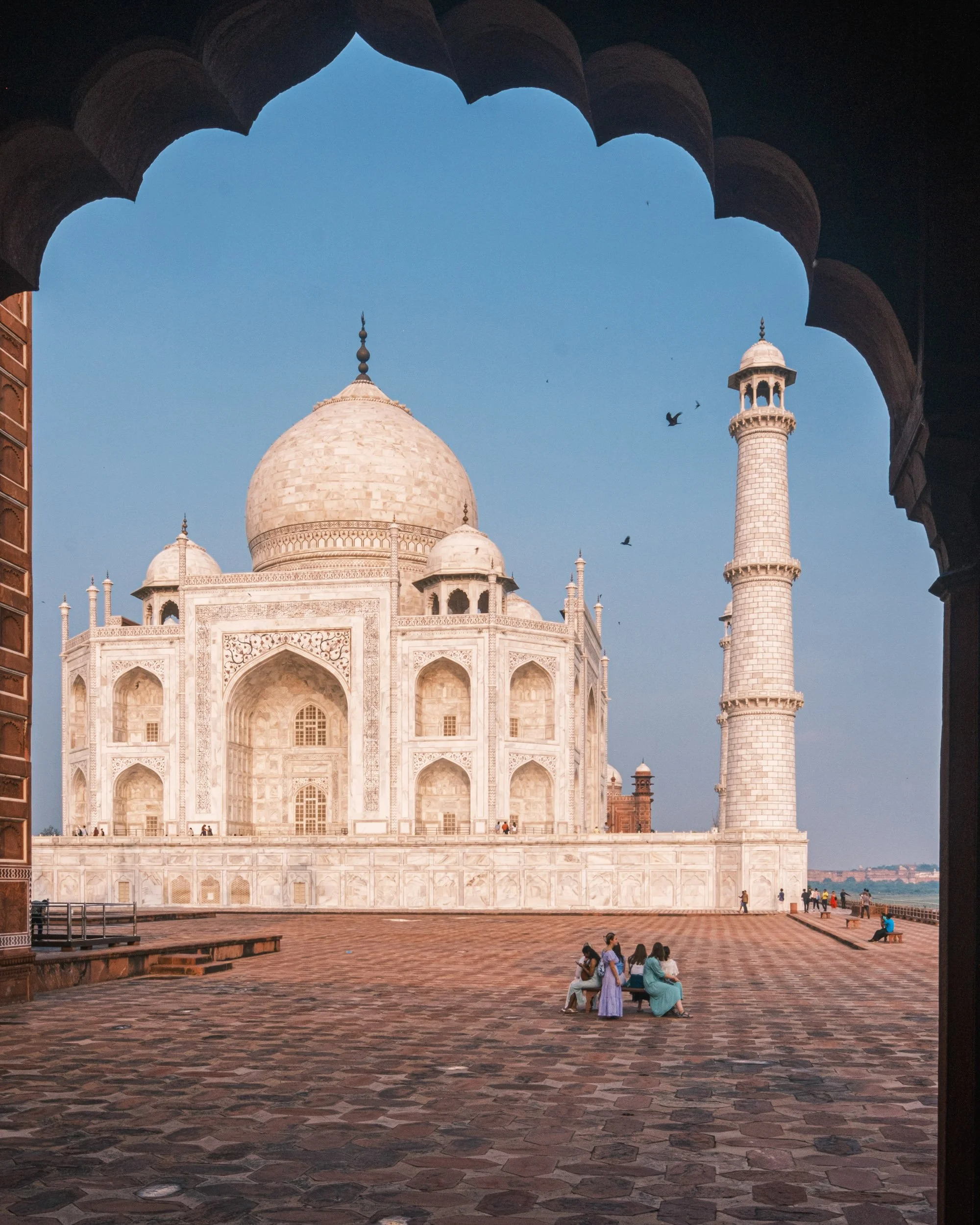
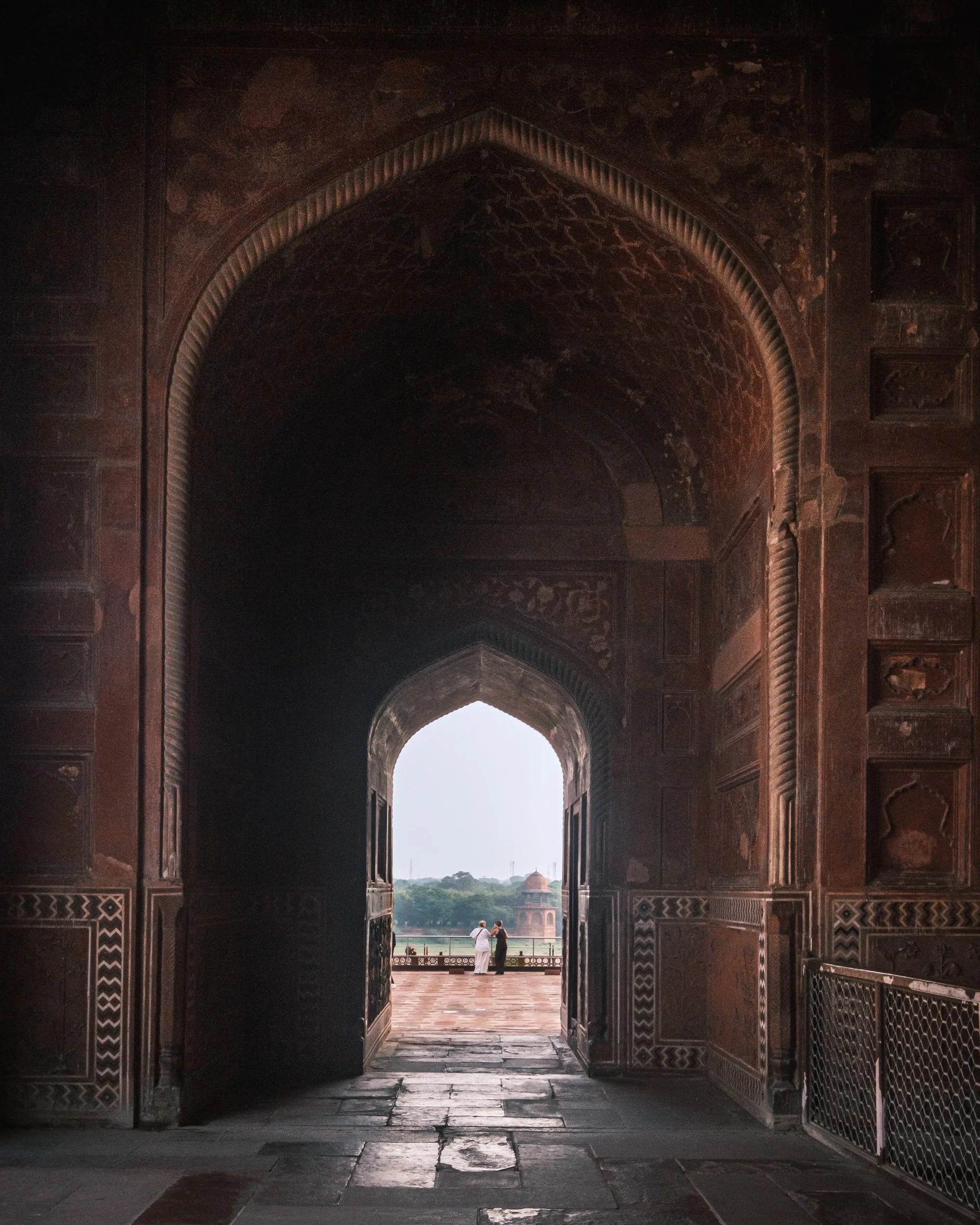
During that early morning at the Taj Mahal, I found myself drawn to the timeless Mughal arches as natural frames for my compositions. These iconic Islamic architectural elements are more than just structural; they represent a deep historical influence that defines the visual landscape of Northern India. By using these ornate archways to frame the marble mausoleum, I was able to create layers of depth that highlight the symmetry and scale.
This framing technique allowed me to capture a perspective that feels both intimate and grand. For any architectural photographer, these physical frames offer a perfect opportunity to blend historical context with a sophisticated, layered narrative.
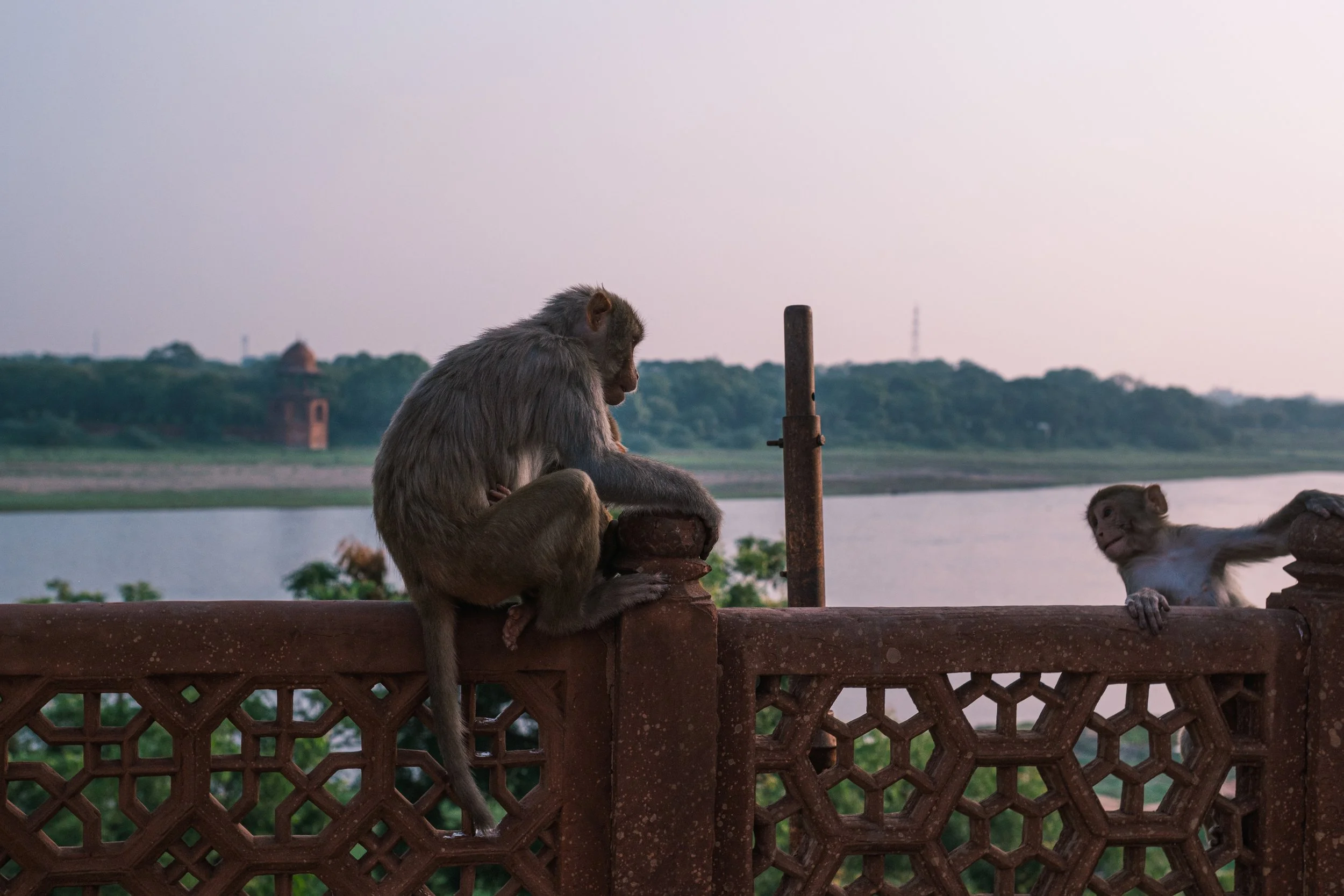
These monkeys were hanging out along the walkway behind the mausoleum, facing the river.
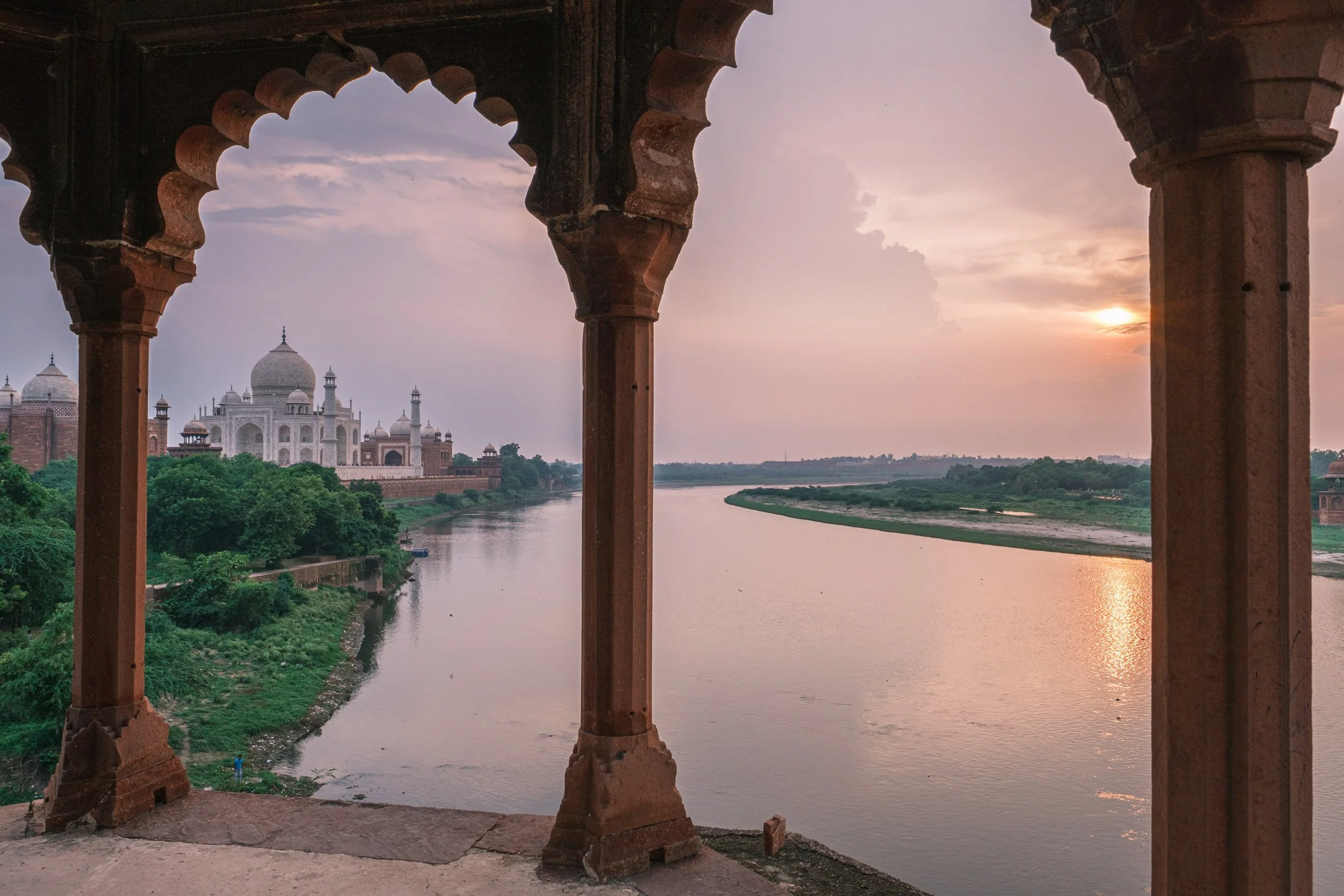
This “secret” viewpoint along the river is accessible by going through a neighborhood and paying a toll to some of the locals.
